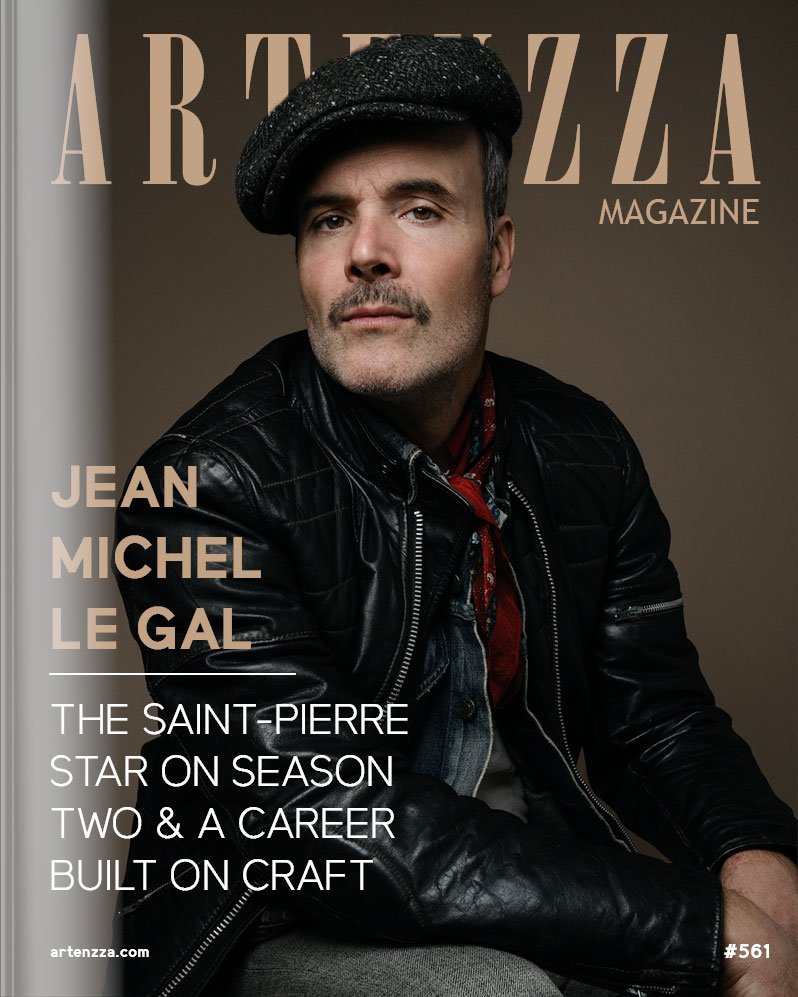
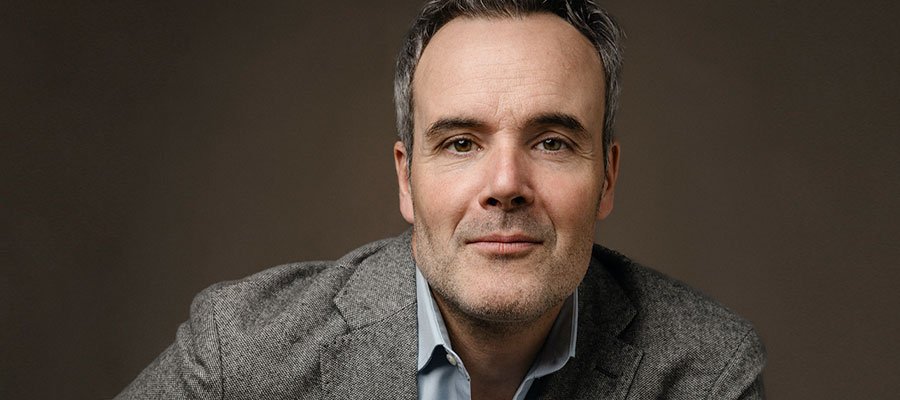
What drew you back to Renuf Aucoin for Season Two, and what excited you most about where the character goes this time?
Since being rescued from a kidnapping in Season One, Renuf has developed a new sense of loyalty to his team — he knows they have his back. What really interested me this season is that he’s more of a team player and genuinely trying to be a better cop. As a local officer, he knows the news, the gossip, and the superstitions of the island, and that allows us to delve further into his past — which isn’t always comfortable or funny. Overall, we see much more of his depth this season. The writers gave me some real challenges, and I hope to keep exploring that side of him.
Renuf’s calm exterior starts to fracture as buried secrets resurface. How did you approach revealing those cracks without losing his quiet intensity?
I wouldn’t necessarily describe Renuf as having quiet intensity, but he definitely knows more than he shows. Like most of us, he tries not to appear vulnerable — we all put a lid on things in real life. As those buried secrets begin to surface, my work was about developing a strong interior life and then containing it during the scenes. Later in the season, when the circumstances overwhelm him, that balance starts to break down. Exploring that tension between control and collapse was one of the most enjoyable challenges as an actor.
Your character has such an intimate knowledge of Saint-Pierre, its people, and its unspoken rules. How did you build that deep sense of place into your performance?
The moustache. Just kidding. A lot of it came from researching the island itself — its history, the accent, and any recordings I could find. But once we started shooting there, the place really took over. The culture, the smell of the salt air, the way everyone says bonjour — all of that seeped into the character. I tried to absorb as much of it as possible, and I’m still working on deepening that sense of place each season.
Season Two raises the emotional and moral stakes for Renuf, especially around loyalty and identity. Was there a moment in the script that really challenged you as an actor?
Episode eight stands out — I can’t wait for audiences to see it. Renuf is torn between his past and his loyalty to the job, and he experiences a deep loss that forces him to confront forgiveness and ultimately do the right thing. That moment genuinely surprised me as an actor. The writing demanded a level of vulnerability that isn’t always easy to access, but it was incredibly rewarding.
You come from a strong classical theatre background. How does that training influence the way you work on a grounded, contemporary television series like Saint-Pierre?
That training taught me range, specificity, timing, and discipline. During my four seasons at Stratford, I played supporting and lead roles and understudied extensively — which meant always being prepared to step in at a moment’s notice. In retrospect, I was incredibly lucky to have that level of challenge both on and off stage. Shakespeare is so muscular and demands precision and that kind of rigor stays with you. I also learned practicing comedy in front of 1,100 people every night on one show, which sharpened my timing and helped me discover my own inner clown. All of that informs my work on screen.
Having worked extensively in both English and French theatre and screen projects, how does being bilingual shape the way you connect to characters and stories?
There’s a saying that my head is in English and my heart is in French, and I think there’s some truth to that. At times, I feel like an outsider in both worlds, but I also feel incredibly lucky to work in both languages. English is concise and malleable, with a culture that can be quite subtle and restrained. French, on the other hand, has a deep enjoyment of words, of the senses, passion, musicality, and volatility. I try to bring elements of both into my characters and the stories I tell.
Renuf often says more through silence than dialogue. How do you work with restraint and still keep the character emotionally alive for the audience?
Renuf’s English is improving, but French is still his first language, so a lot of the silence comes from listening and processing. He’s often taking things in before responding. I’m not sure I’d call it restraint exactly, because when he does speak, he’s actually quite open and expressive. The silence is less about holding back and more about attention.
Saint-Pierre brings together very different characters and policing styles. How does Renuf fit into that dynamic between Arch and Fitz, and how does it affect him?
It took Renuf some time to warm up to Arch and Fitz, but by Season Two his loyalty to the team is solid. He genuinely wants to help and do the right thing. Arch and Fitz are both intelligent, hardworking, and courageous, and Renuf aspires to that. Because he’s not always quite there yet, those dynamics can sometimes lead to moments of humor. Which makes Renuf a very fun character to play.
You have played everything from Shakespeare to modern genre television. What kind of storytelling excites you most at this point in your career?
As a younger actor, I wanted to try everything — every technique, every type of character. The more, the better. At this point in my career, I’m much more interested in subtlety. Less is more. Rather than grand gestures, I’m drawn to subtlety, to surprising, challenging stories. For me, it’s really about the quality of the writing rather than the genre.
That said, I’ve always wanted to do a western. Problem is I’m a little scared of horses but I’m actually planning to start riding lessons soon. I think it’s important to do what you fear. There’s a great Joseph Campbell quote: “The cave you fear to enter holds the treasure you seek.” You could say, “Yes, but if I go into the cave I might die.” And that’s true. But if you don’t go into the cave, you might not fully live either.
As audiences respond so strongly to Renuf, what do you hope viewers ultimately understand or feel about him by the end of this season?
I hope audiences recognize that there’s always much more going on inside people than what appears on the surface. Renuf is a fairly simple guy in some ways, but he’s full of flaws, he has a good heart, and he carries hidden sorrows. If viewers can believe in him as much as I do by the end of the season, then we’ve done our job.
From your experience in the industry, what are the three most important qualities an artist needs to build a lasting career today?
Perseverance — if you stay hardworking long enough, your time eventually comes. Curiosity — always keep learning. And a sense of humor, because you’ll need it to survive the darker moments.